
Cloud Infrastructure Technology Explainer
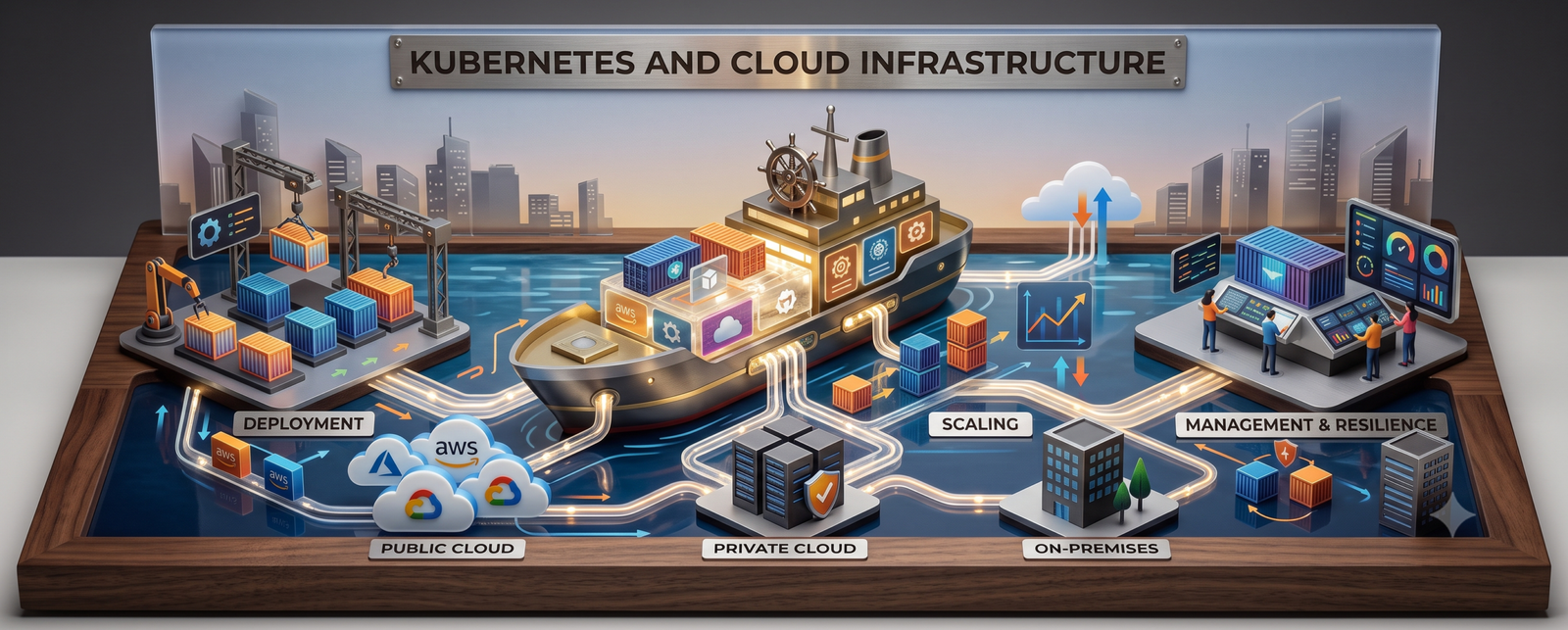
Kubernetes automates container deployment, scaling, and management, helping enterprises build resilient, cloud-native applications with greater operational efficiency.
By eTechIntel Research | Technology Explainer | Source: eTechIntel

As organizations modernize applications, Kubernetes has become the standard platform for managing containerized workloads across cloud and on-premises environments.

It enables development and operations teams to deploy applications faster while improving scalability, availability, and infrastructure utilization.

Kubernetes simplifies application orchestration, allowing enterprises to scale workloads automatically while improving reliability and reducing operational complexity.

By combining automation, self-healing capabilities, and workload portability, Kubernetes supports consistent application performance across distributed environments.

⚠ Within the next 2–4 years, enterprises without container orchestration strategies may face slower deployments, higher infrastructure costs, and reduced application resilience.

For CIOs, DevOps teams, and platform engineers, Kubernetes has become a foundational technology for cloud-native transformation and scalable software delivery.

  • Container orchestration fundamentals
  • Automated application scaling
  • High availability and self-healing
  • Cloud-native deployment strategies
  • Kubernetes security best practices

Understanding Kubernetes helps organizations accelerate application delivery while improving operational efficiency, resilience, and long-term scalability.

Enterprise Kubernetes Adoption Guide
Explore how Kubernetes transforms application delivery with proven deployment strategies, security guidance, and operational best practices.

✔ Kubernetes architecture overview
✔ Deployment best practices
✔ Security and governance insights
✔ Cloud-native implementation roadmap
Access Intelligence Brief