
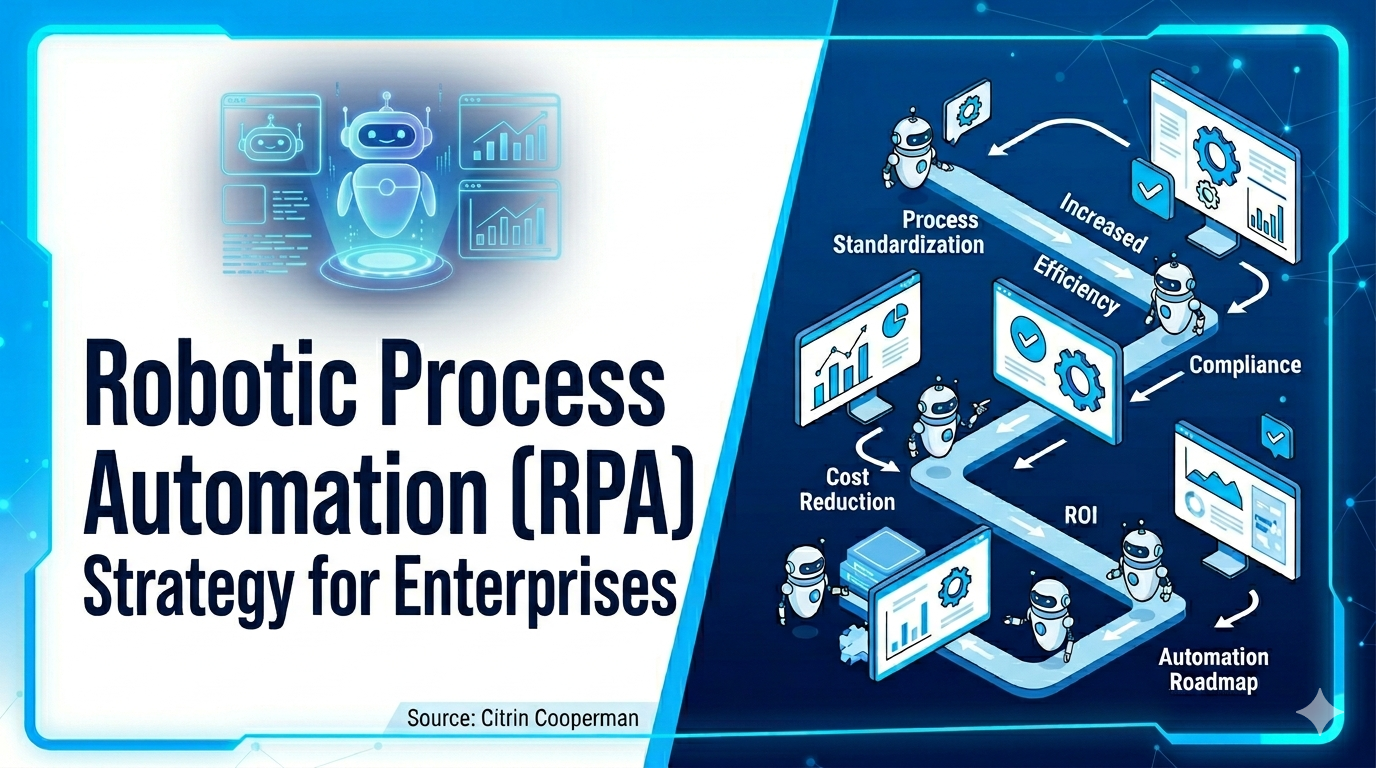
Enterprises are rapidly adopting robotic process automation to manage growing volumes of financial, operational, and transactional data across multiple systems.
As digital transformation accelerates, organizations struggle with fragmented workflows that delay decision-making and increase operational overhead.
Without proper standardization, automation amplifies inefficiencies instead of eliminating them, creating hidden risks across finance and operations teams.
RPA enables enterprises to convert manual, time-intensive workflows into structured digital processes that improve accuracy, speed, and compliance readiness.
For enterprise leaders, automation is no longer just a productivity tool but a strategic capability that directly impacts financial control and operational transparency.
- Standardization of high-volume business processes
- ROI-driven automation investment planning
- Cross-functional workflow mapping and governance
- Enterprise-wide automation roadmap development
✔ Process efficiency evaluation
✔ Cost-benefit and ROI analysis
✔ Compliance and risk exposure mapping
✔ Strategic automation roadmap