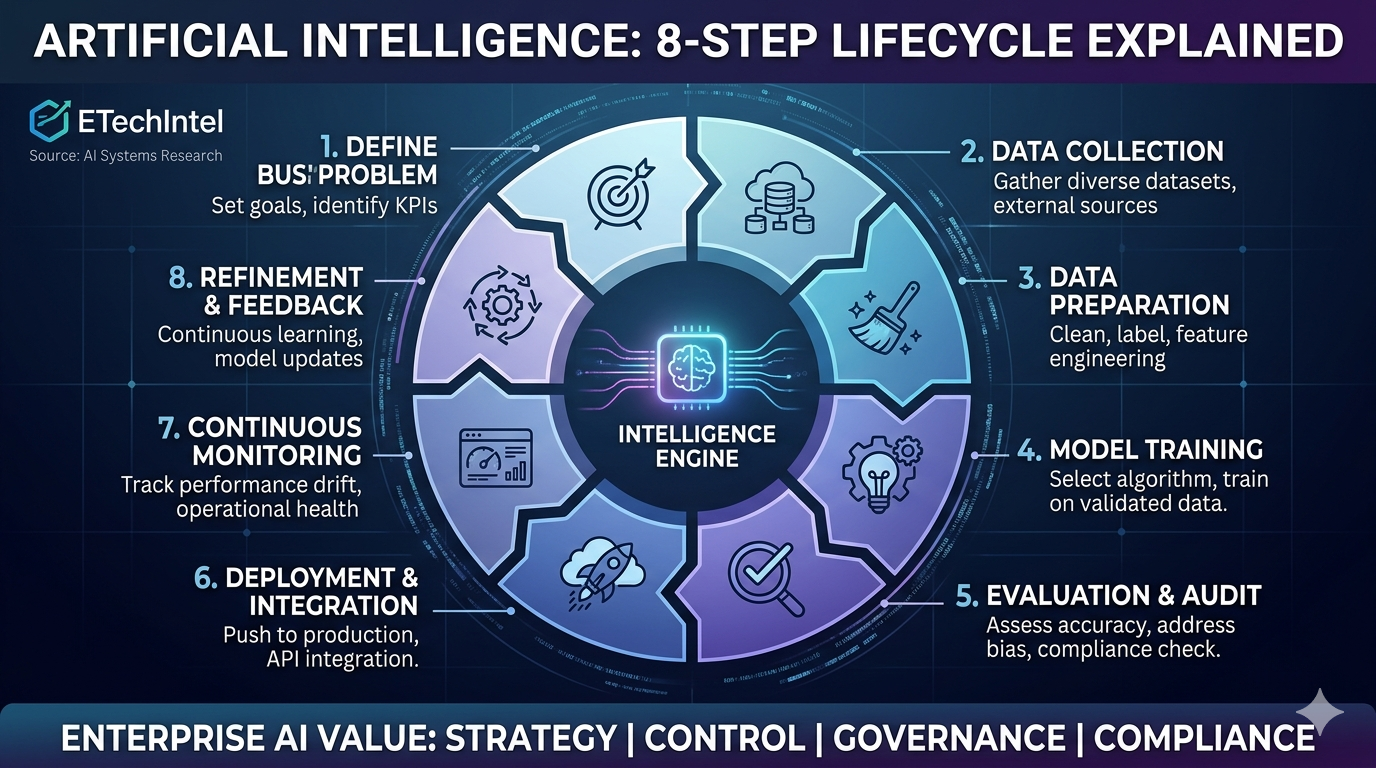
Artificial Intelligence works through a structured lifecycle that defines how AI systems process data, train models, and generate predictions across enterprise environments and machine learning workflows.
For enterprise leaders, understanding how artificial intelligence works is critical as AI systems now directly impact financial operations, cloud infrastructure, cybersecurity frameworks, and customer intelligence platforms.
Each stage of the AI lifecycle — from data collection to model deployment — influences system reliability, scalability, and regulatory compliance in enterprise AI adoption.
The complexity of artificial intelligence is not in the algorithm alone but in how organizations manage data quality, model training processes, validation cycles, and post-deployment monitoring systems.
- Structured AI data governance and validation pipelines
- Controlled machine learning model training environments
- Explainable AI and audit-ready evaluation frameworks
- Continuous monitoring for AI model drift and performance degradation
For CTOs, CIOs, and enterprise AI teams, mastering the AI lifecycle is essential to build scalable, compliant, and production-ready intelligent systems.
✔ End-to-end AI risk mapping
✔ Governance gap analysis for enterprise AI systems
✔ Model performance and accuracy evaluation
✔ Executive-level AI readiness insights