
Enterprise Low-Code Transformation Report

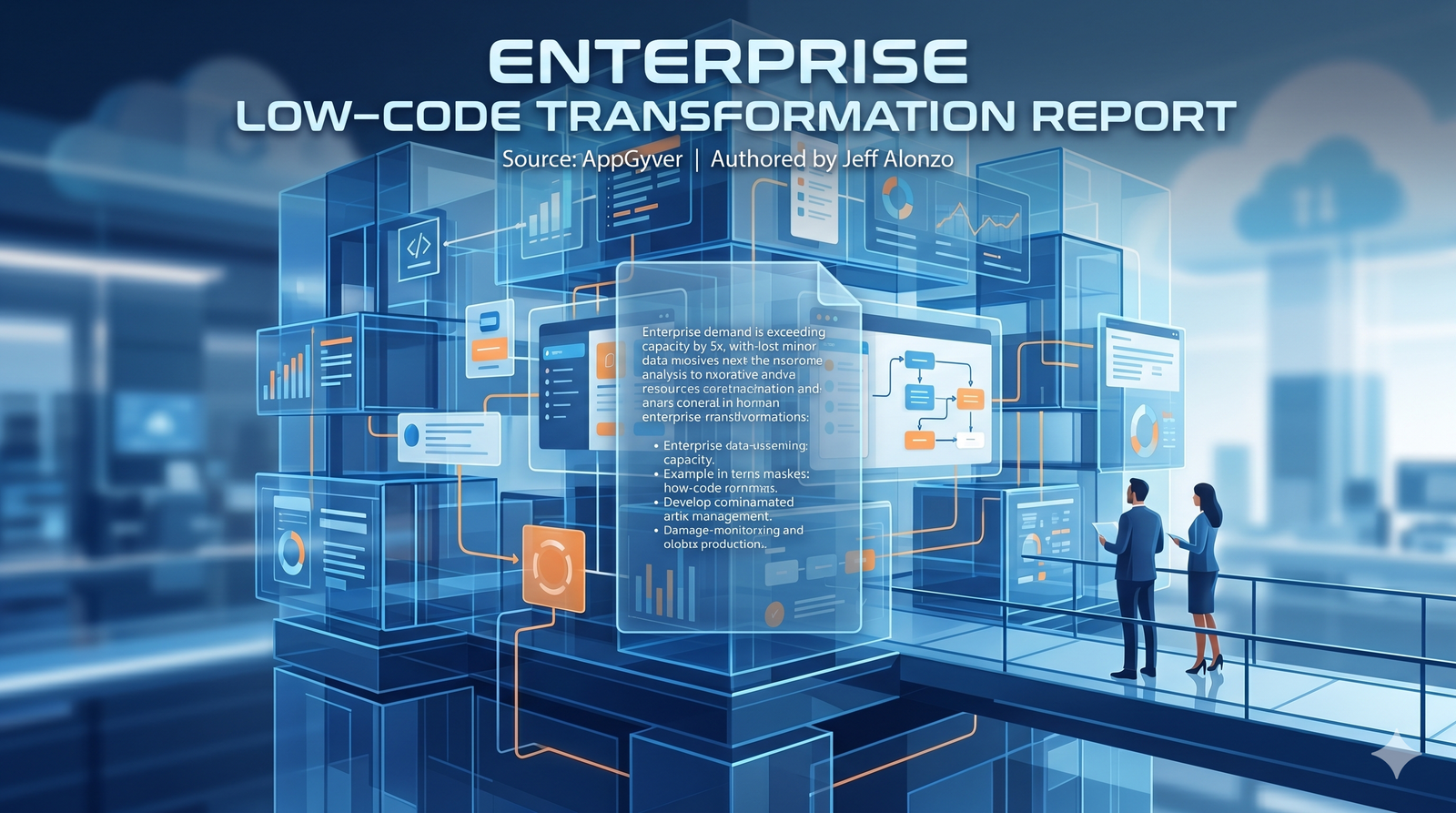
Enterprise app demand is projected to exceed development capacity by 5x, forcing IT leaders to rethink traditional coding models.
Enterprise teams are accelerating digital transformation through B2E and workflow automation applications.
Low-code platforms are emerging as a strategic response to rising app backlogs, security demands, and developer shortages.
Within the next 3–5 years, organizations relying solely on traditional app development will struggle to scale enterprise mobility initiatives.
Modern low-code platforms now support enterprise-grade security, private cloud deployment, API integrations, and reusable app components.
⚠ Delayed modernization can leave financial systems, workforce operations, and customer workflows trapped in costly development bottlenecks and legacy infrastructure risk.
For CIOs and IT leaders, low-code adoption is shifting from tactical experimentation to enterprise-wide application strategy.
- Private cloud and on-premise deployment support
- Reusable enterprise workflow components
- Integrated identity and access management
- Cross-platform mobile app delivery
Organizations adopting governed low-code frameworks are reducing app delivery timelines while improving operational agility.
Enterprise Low-Code Readiness Assessment
Evaluate whether your application strategy can scale with rising enterprise mobility and automation demands.
✔ App backlog exposure analysis
✔ Infrastructure modernization insights
✔ Enterprise mobility roadmap
✔ Strategic platform recommendations
Download Full Report✔ App backlog exposure analysis
✔ Infrastructure modernization insights
✔ Enterprise mobility roadmap
✔ Strategic platform recommendations