
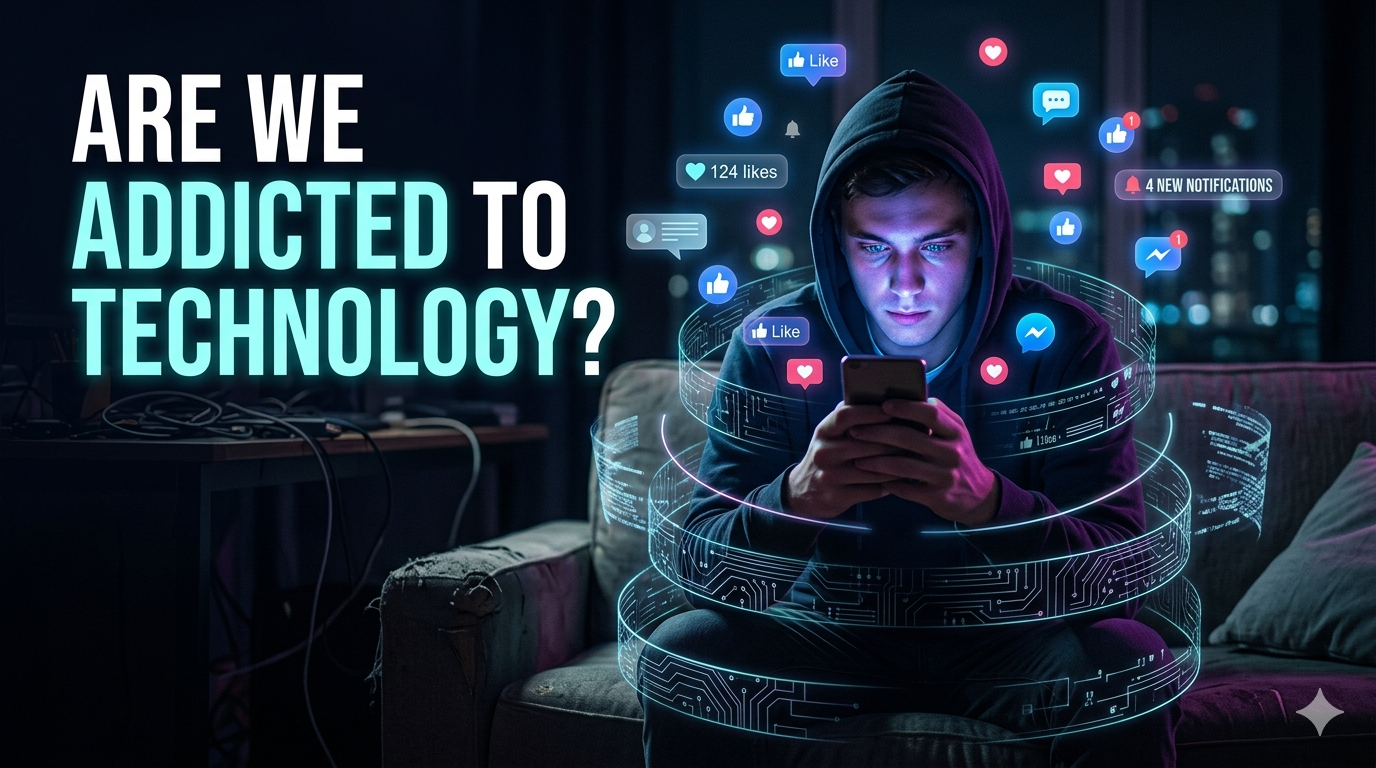
The rapid rise of smartphones, social media, and always-connected platforms has changed how humans interact with the world.
What once was occasional usage has now evolved into constant engagement driven by notifications, algorithms, and infinite scrolling systems.
According to research from Pew Research Center, screen time has increased dramatically over the last decade, especially among younger users.
Google Digital Wellbeing insights also show that users check their phones hundreds of times per day, often without conscious intent.
Social media platforms are designed using psychological principles such as dopamine-driven reward loops, encouraging repeated engagement.
This creates a cycle where users constantly seek notifications, likes, and updates—reinforcing dependency behaviors.
Key impacts of digital overuse include:
- Reduced focus and deep work ability
- Increased distraction and multitasking fatigue
- Sleep disruption due to screen exposure
- Lower productivity in daily tasks
However, technology is not inherently harmful—it depends on how it is used and managed.
Digital wellbeing tools, screen-time limits, and mindful usage habits are emerging as solutions to restore balance.
Ultimately, awareness is the first step toward reducing digital dependency and improving productivity and mental clarity.
✔ How many hours do you spend on your phone daily?
✔ Is social media improving or distracting your life?
✔ Can we truly control our digital habits?
Your perspective matters in understanding modern digital behavior.