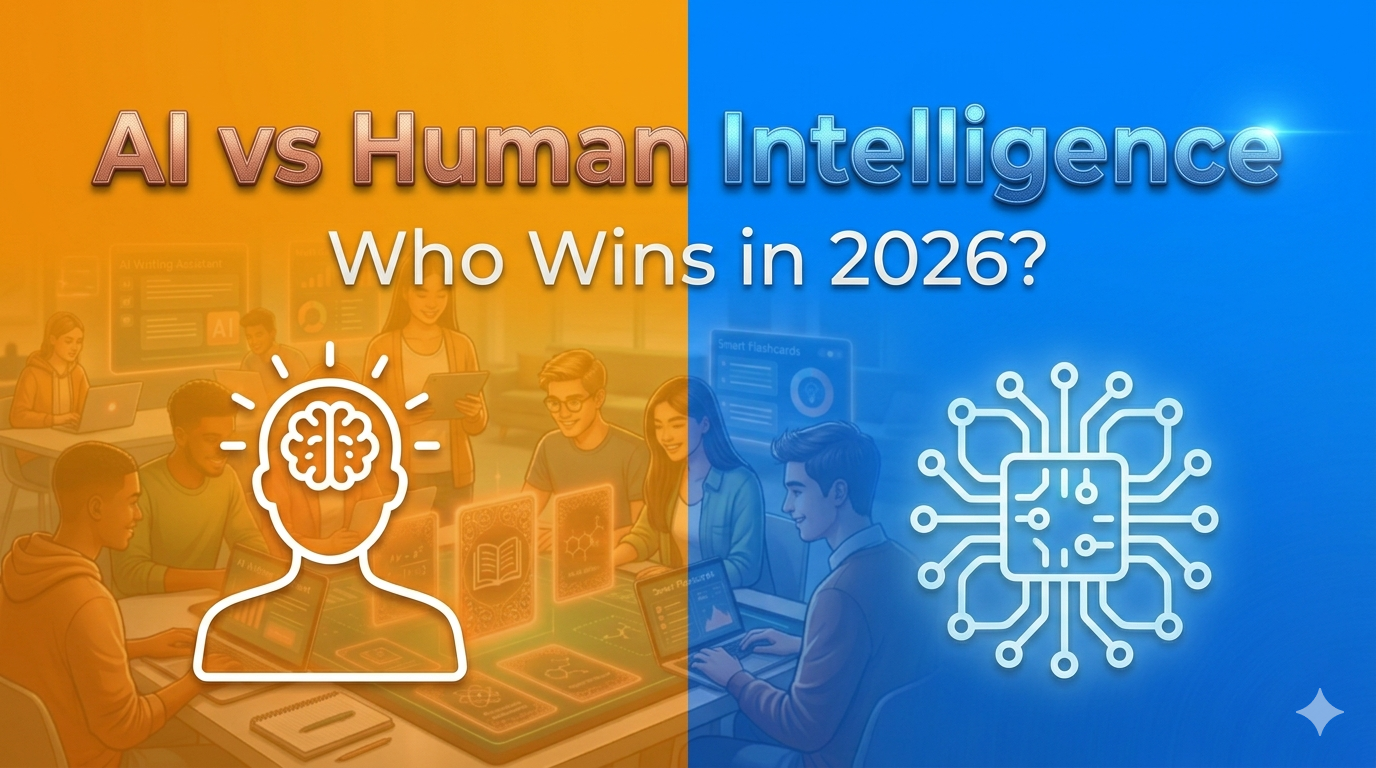
In 2026, the debate between Artificial Intelligence and human intelligence is more relevant than ever. As AI systems grow increasingly sophisticated, questions arise about their capabilities compared to human cognition. While AI excels in speed, pattern recognition, and data processing, human intelligence remains unmatched in creativity, emotional understanding, and ethical reasoning.
Understanding the strengths and limitations of both AI and humans helps us navigate a future where collaboration between technology and human expertise is essential.
Speed and Accuracy: AI Takes the Lead
AI algorithms process enormous datasets faster than any human could. They can perform complex calculations, detect patterns, and predict outcomes with high precision.
- Data-driven decisions in milliseconds
- Accurate predictions using machine learning models
- Error reduction in repetitive tasks
Industries such as finance, healthcare, and logistics rely on AI for tasks where speed and accuracy are critical.
Creativity and Emotional Intelligence: Humans Lead
Despite AI’s advancements, humans continue to dominate in creativity, emotional understanding, and moral judgment. Designing innovative solutions, composing art, or empathizing with others requires intuition and subjective insight that AI cannot replicate.
- Creative problem-solving and innovation
- Emotional support and interpersonal communication
- Ethical decision-making and moral reasoning
These uniquely human qualities make collaboration with AI most effective when humans provide guidance and context.
AI in Everyday Applications
AI enhances human productivity across various fields. From virtual assistants managing schedules to diagnostic tools in medicine, AI is a partner rather than a replacement.
- Smart automation in workplaces
- Healthcare diagnostics and predictive analytics
- Personalized learning and adaptive education platforms
By complementing human intelligence, AI allows professionals to focus on critical thinking and creativity while delegating routine tasks to machines.
Ethical Considerations and Collaboration
The rise of AI brings important ethical questions: data privacy, accountability, and decision-making transparency. Humans remain essential for monitoring AI systems and ensuring responsible use.
- Oversight of automated decision-making
- Ensuring AI fairness and bias reduction
- Collaborative problem-solving between AI and human experts
The most promising future involves humans and AI working together, leveraging the strengths of each to solve complex challenges.
💬 Have a Question or Insight?
We’d love to hear your thoughts! Whether you have doubts, suggestions, or your own experience with AI and human intelligence — your voice matters.
👉 Fill out the form on the right side of this article and share your feedback.