Generative AI Governance Intelligence Report

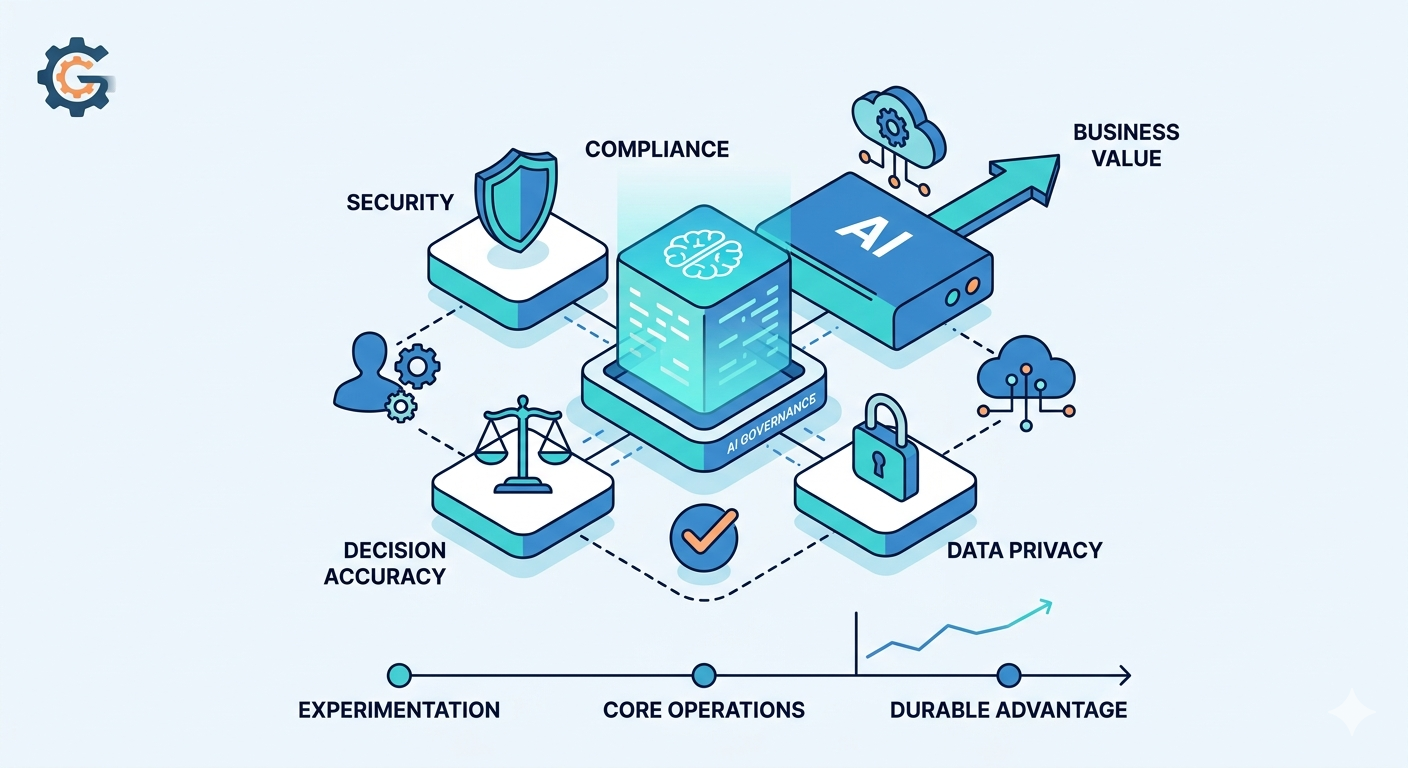
Generative AI is shifting from experimentation to core operations, but unmanaged models can expose enterprise data, decisions, and brand trust at scale.
AI has evolved from rule-based tools into systems that generate content, recommendations, and code from massive datasets.
That shift creates new opportunity for enterprise teams—while raising urgent governance demands across security, compliance, and decision accuracy.
The real competitive gap is no longer AI adoption—it is whether leaders can deploy AI with control, accountability, and measurable business value.
Organizations that combine innovation with policy, human oversight, and approved workflows will scale faster with lower operational risk.
⚠ Within the next 12–24 months, enterprises using ungoverned AI may face data leakage, biased outputs, regulatory scrutiny, and disruption across customer, financial, and cloud systems.
AI will reshape workflows, vendor ecosystems, and workforce models. Governance maturity will become a board-level differentiator across industries.
- Establish enterprise AI governance councils
- Apply NIST AI RMF and ISO 42001 controls
- Use human review for high-risk outputs
- Restrict sensitive data in public models
- Track ROI, risk, and model performance
Security leaders and digital transformation teams that act early can turn AI from experimentation into durable advantage.
Enterprise AI Risk & Readiness Assessment
Benchmark your organization’s AI exposure, governance gaps, and scale readiness before competitors move faster.
✔ Risk exposure analysis
✔ Governance maturity score
✔ Adoption roadmap
✔ Executive recommendations
Download the Report✔ Risk exposure analysis
✔ Governance maturity score
✔ Adoption roadmap
✔ Executive recommendations