Enterprise Edge Computing Explainer
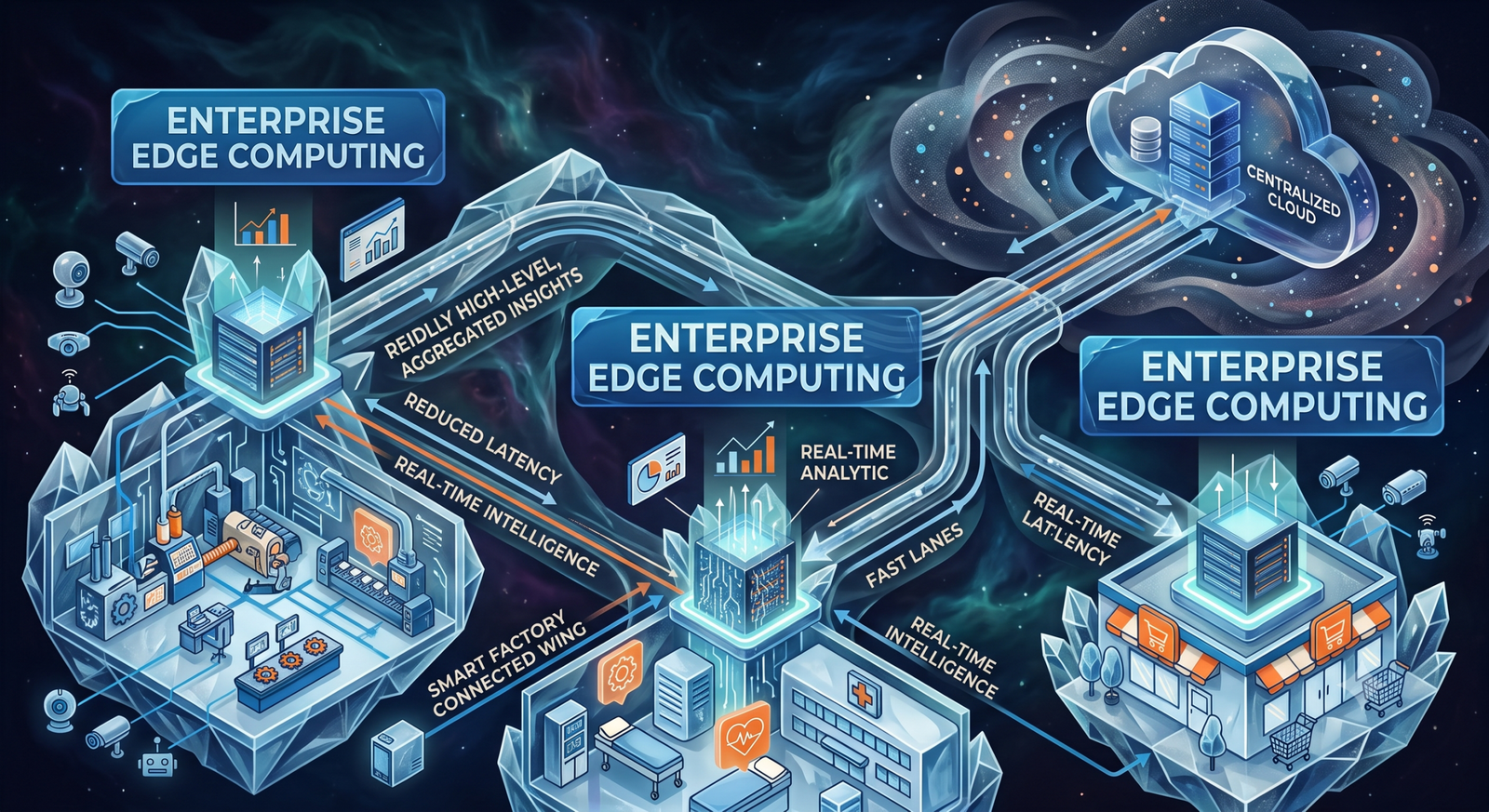
As connected devices, IoT, and real-time applications expand, enterprises are moving computing resources closer to users and endpoints to improve responsiveness.
Edge computing reduces dependence on centralized cloud processing while supporting faster analytics, greater reliability, and more efficient data management.
Combining edge infrastructure with cloud platforms allows organizations to optimize performance, strengthen resilience, and support data-intensive workloads.
For CIOs, infrastructure leaders, and digital transformation teams, edge computing is becoming a key enabler of intelligent, distributed enterprise operations.
- Low-latency data processing
- IoT and connected device support
- Edge-to-cloud integration
- Real-time analytics capabilities
- Distributed infrastructure management
Understanding edge computing helps organizations build scalable digital infrastructure that supports innovation, resilience, and business agility.
✔ Edge architecture overview
✔ Deployment best practices
✔ Infrastructure optimization insights
✔ Enterprise implementation roadmap