Enterprise AI Governance Explainer

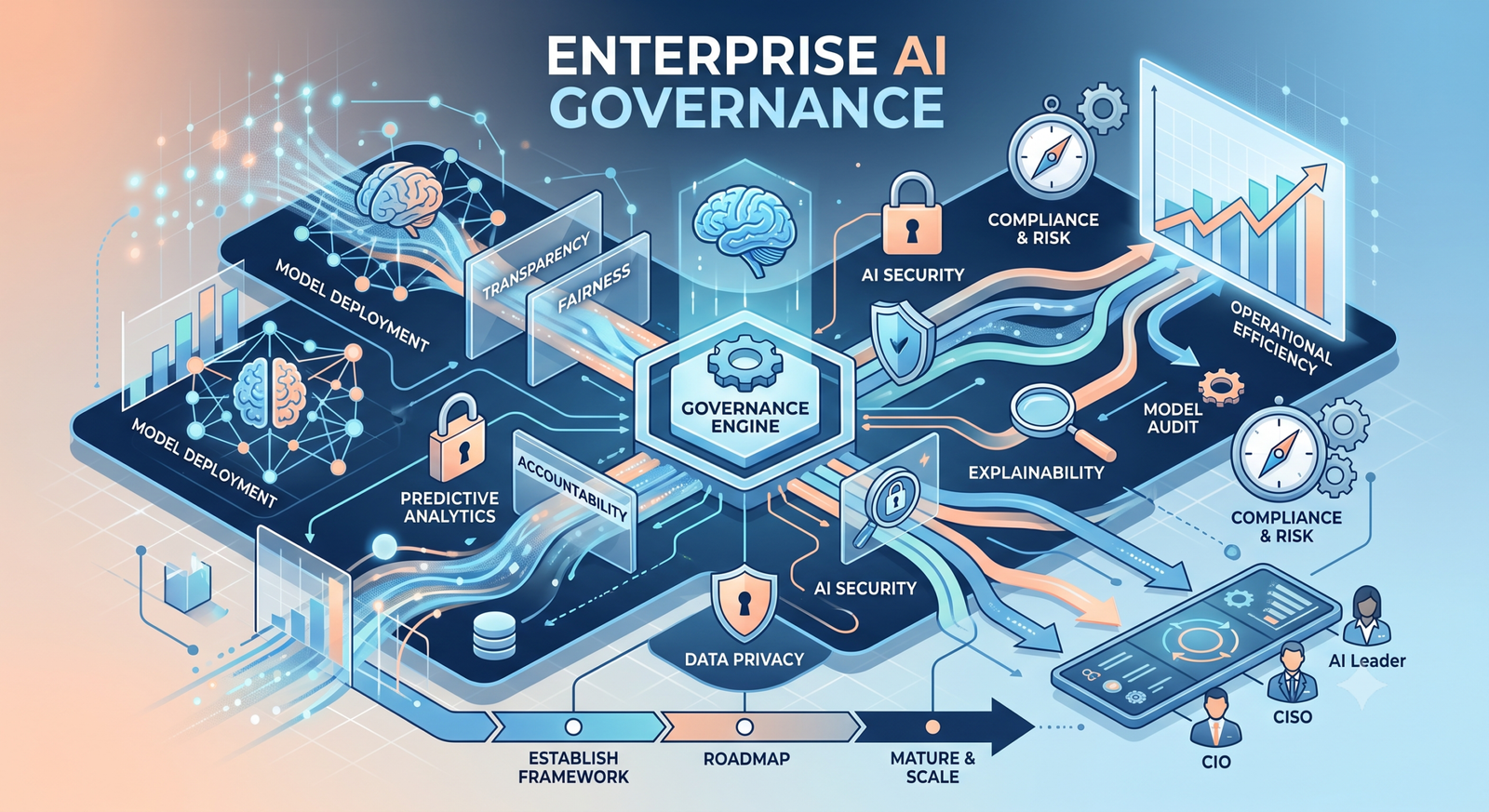
AI governance helps enterprises deploy artificial intelligence responsibly by ensuring transparency, security, compliance, and accountability across AI systems.
As AI becomes embedded in critical business processes, organizations need clear governance to manage risk, maintain trust, and meet regulatory requirements.
Modern AI governance combines policies, oversight, and technical controls to ensure AI systems remain reliable, ethical, and aligned with business objectives.
Strong AI governance transforms AI from a technology experiment into a trusted enterprise capability with measurable business value.
Governance frameworks help organizations monitor AI models, protect sensitive data, reduce bias, and support explainable decision-making.
⚠ Within the next 2–4 years, enterprises without AI governance frameworks risk regulatory penalties, data breaches, biased outcomes, and loss of stakeholder trust.
For CIOs, CISOs, and AI leaders, governance is essential for scaling AI securely while protecting enterprise assets and reputation.
- AI governance frameworks
- Responsible AI principles
- Risk and compliance management
- Model transparency and oversight
- Enterprise AI security practices
Understanding AI governance enables organizations to accelerate AI adoption while maintaining compliance, security, and operational confidence.
Enterprise AI Governance Guide
Learn how to establish effective AI governance with practical frameworks, risk controls, and implementation strategies for enterprise AI.
- ✔ AI governance framework
- ✔ Compliance best practices
- ✔ Risk management insights
- ✔ Responsible AI roadmap