
Cloud ERP Evaluation Intelligence Report

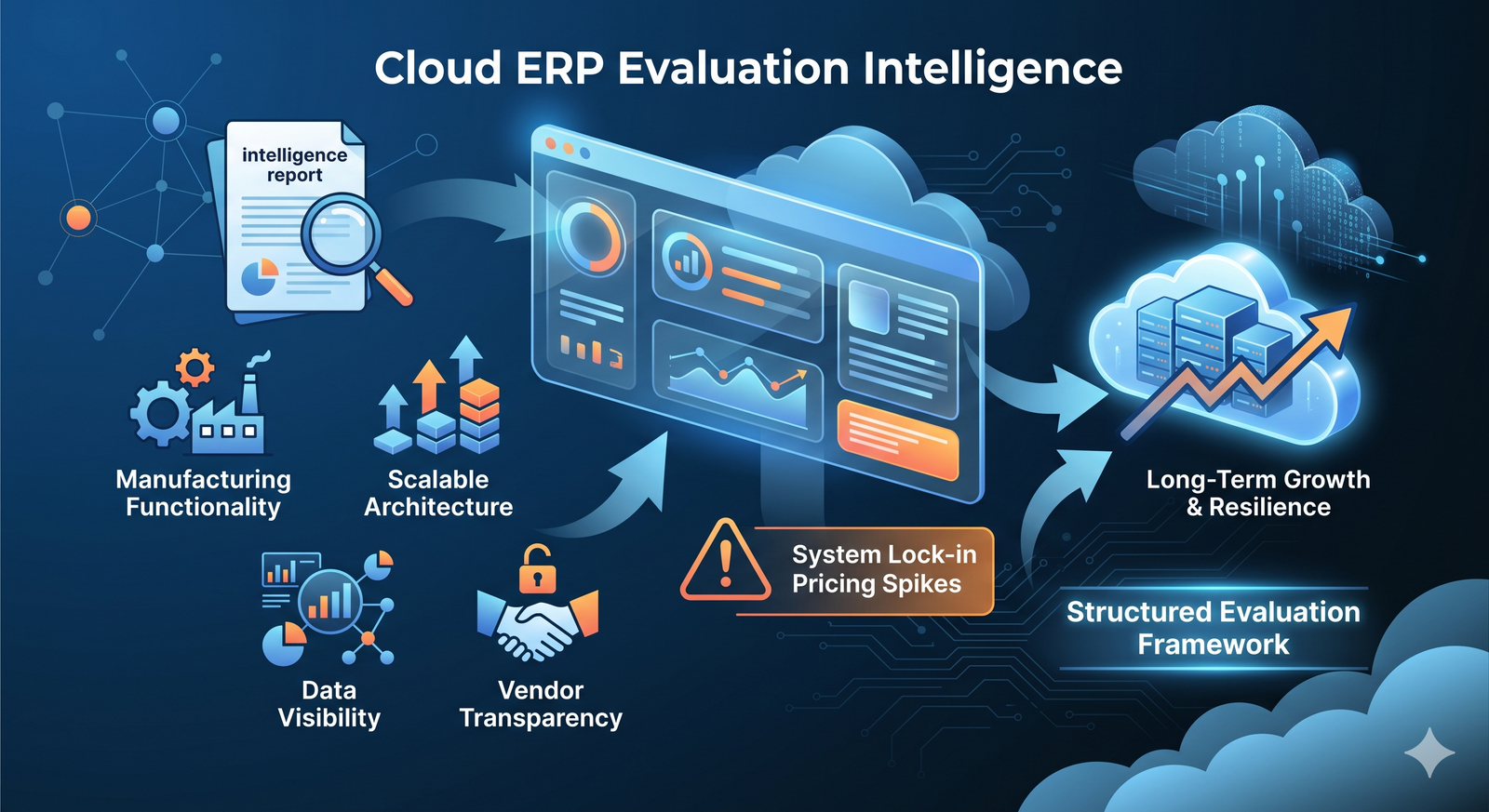
Cloud ERP decisions are directly impacting operational control, cost predictability, and enterprise-wide data visibility.
Cloud ERP has moved from a cost-saving option to a core infrastructure decision for manufacturing and operations leaders.
As adoption accelerates, enterprise teams must evaluate not just features—but long-term control, scalability, and vendor dependency.
Selecting a cloud ERP without evaluating operational fit and control models can lock enterprises into costly, inflexible systems.
For CIOs and IT leaders, ERP is no longer software—it’s the backbone of financial systems, supply chains, and production visibility.
⚠ Within the next 2–4 years, poorly evaluated ERP decisions can lead to system lock-in, pricing spikes, and loss of control over critical business data and operations.
Leading organizations are shifting toward structured ERP evaluation frameworks focused on flexibility, governance, and integration.
- Manufacturing-specific functionality alignment
- Customizable and scalable architecture
- Unified enterprise-wide data visibility
- Vendor transparency and pricing protection
- Data ownership and exit strategy clarity
This approach ensures ERP investments support long-term growth without compromising control or operational resilience.
Enterprise Cloud ERP Decision Framework
Assess your ERP strategy against critical risk and performance benchmarks before committing.
✔ ERP fit-gap analysis
✔ Vendor risk evaluation
✔ Cost and control assessment
✔ Deployment strategy insights
Download Full Report✔ ERP fit-gap analysis
✔ Vendor risk evaluation
✔ Cost and control assessment
✔ Deployment strategy insights