Cloud Workforce Readiness Report Cloud adoption began as an IT infrastructure decision, focused on storage, systems, and application delivery.It has now shifted into an enterprise talent issue as non-technical roles increasingly depend on cloud-based platforms to perform core work.
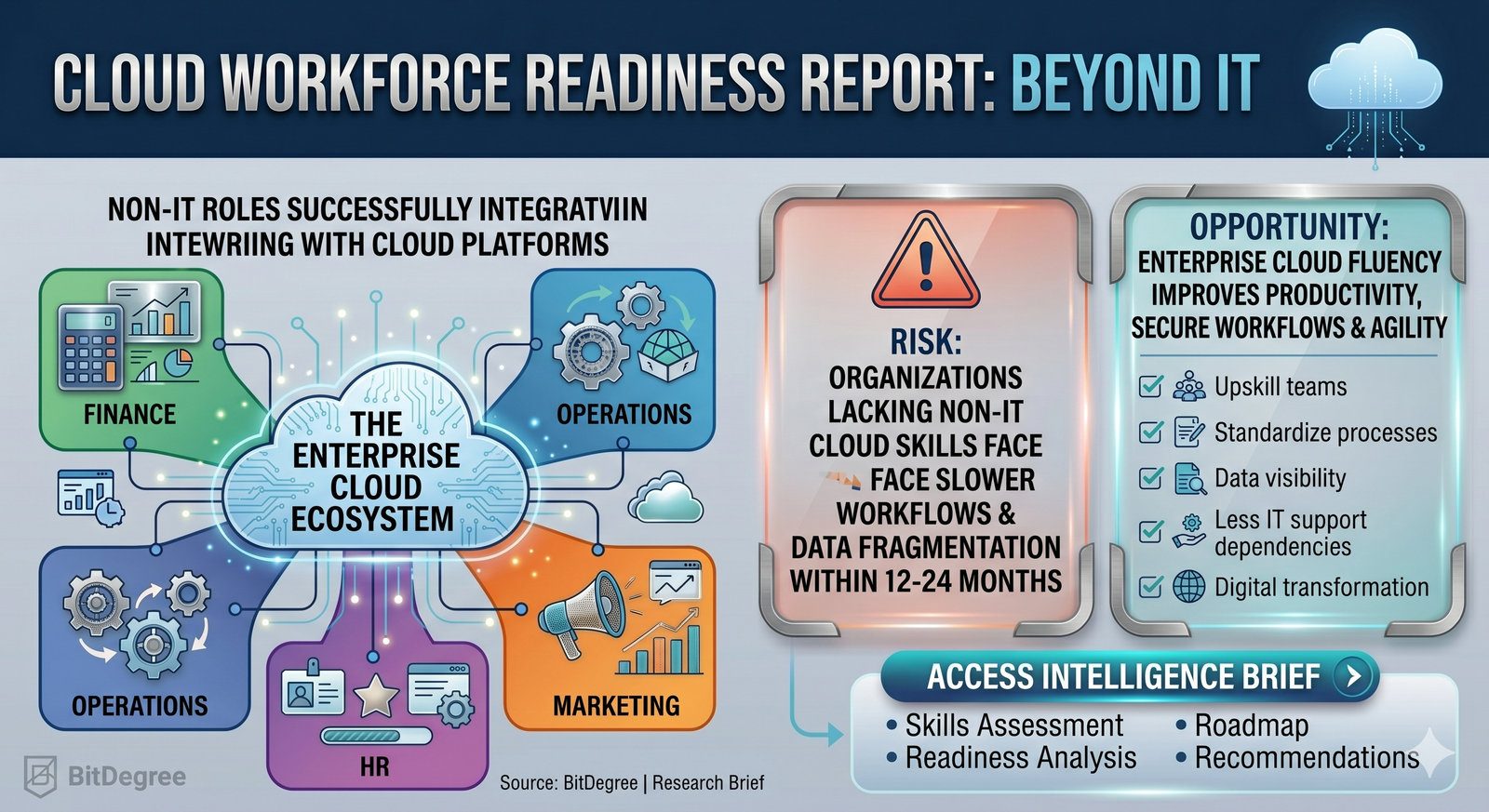
Cloud capability is now a revenue, efficiency, and resilience requirement across finance, operations, HR, and customer-facing teams.
Enterprises that limit cloud skills to IT teams create slower workflows, fragmented data access, and weaker cross-functional execution.
Modern banking, retail, CRM, analytics, and workforce tools already run in cloud environments, making business-user fluency a competitive advantage for leaders.⚠ Within the next 12–24 months, organizations without cloud-ready business teams may face productivity loss, reporting delays, and higher operating costs across critical functions.
Broader cloud literacy improves adoption speed, governance alignment, and faster decision-making across distributed enterprise operations.- Upskill finance, HR, and operations teams
- Standardize secure cloud workflows
- Improve data visibility across departments
- Reduce dependency on technical support queues
- Accelerate digital transformation programs
Enterprise Cloud Skills Gap Assessment
Identify where non-IT teams need cloud capability to improve performance and reduce execution risk.✔ Role-based readiness analysis
✔ Upskilling priority roadmap
✔ Productivity gap insights
✔ Strategic workforce recommendations
Download the Report