
Snowflake Data Engineering Intelligence Report

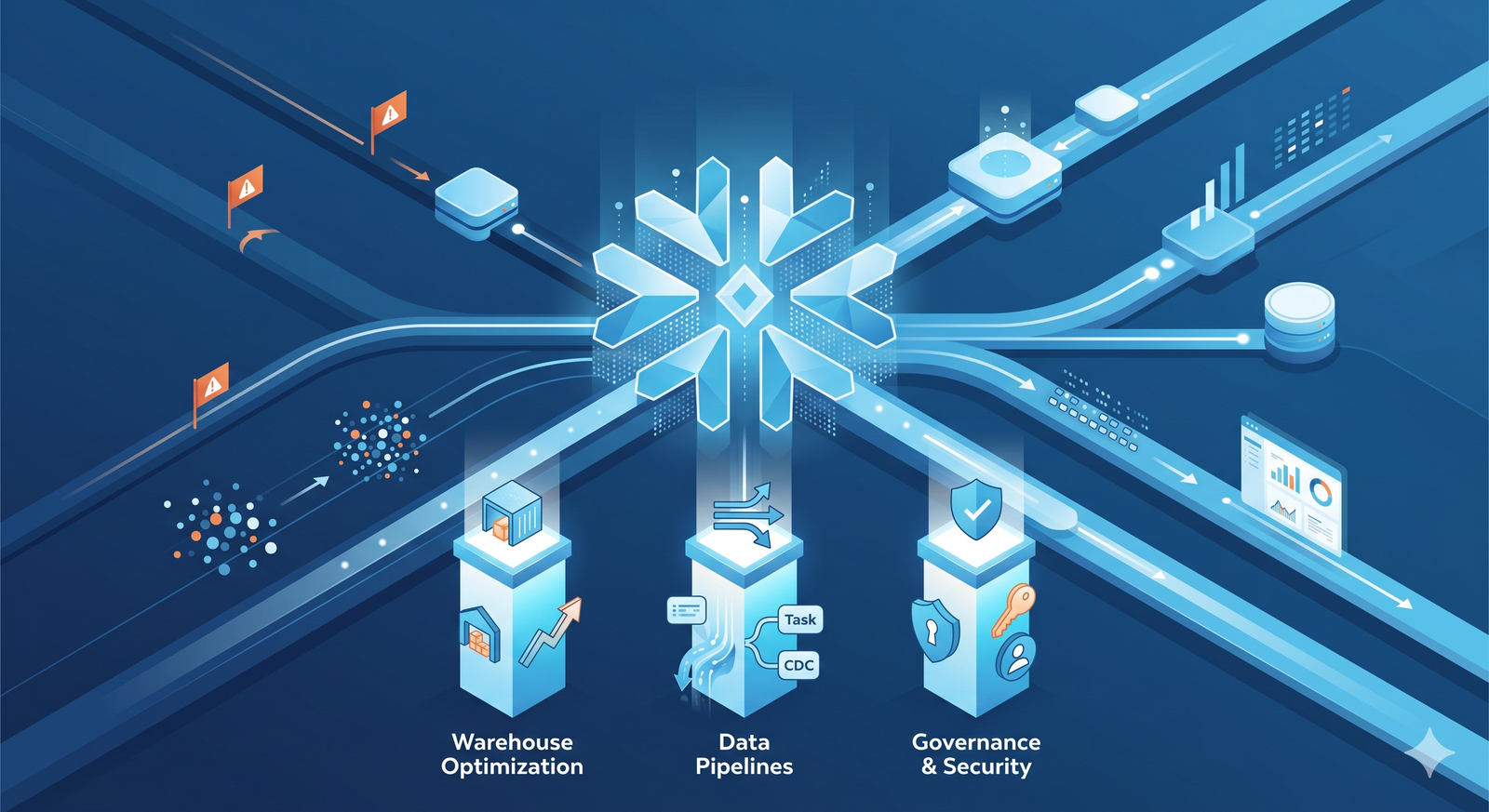
Poor Snowflake architecture decisions inflate compute costs, slow analytics, and delay enterprise decision-making at scale.
Snowflake changed enterprise data platforms by separating storage, compute, and cloud services into independently scalable layers.
As data volumes accelerate, leaders now need governance, performance, and cost control—not just migration success.
Enterprises that optimize warehouse sizing, pipelines, and governance early can unlock faster analytics while reducing unnecessary cloud spend.
High-performing teams use virtual warehouses, automated scaling, CDC pipelines, and strict access controls to align performance with business demand.
⚠ Within the next 12–24 months, unmanaged Snowflake growth can create budget overruns, weak data quality, and reporting delays across finance, operations, and customer analytics systems.
For CTOs and data leaders, Snowflake maturity now influences competitiveness, AI readiness, and the speed of cross-functional insight delivery.
- Right-size virtual warehouses by workload
- Use Streams and Tasks for near real-time pipelines
- Enforce role-based access and network policies
- Validate data quality before downstream reporting
This operating model strengthens governance, improves query performance, and protects enterprise margins.
Snowflake Performance & Cost Optimization Blueprint
Benchmark your Snowflake environment and uncover high-impact optimization opportunities for enterprise teams.
✔ Compute cost exposure analysis
✔ Data pipeline improvement roadmap
✔ Security governance priorities
✔ Executive performance recommendations
Download the Report✔ Compute cost exposure analysis
✔ Data pipeline improvement roadmap
✔ Security governance priorities
✔ Executive performance recommendations