
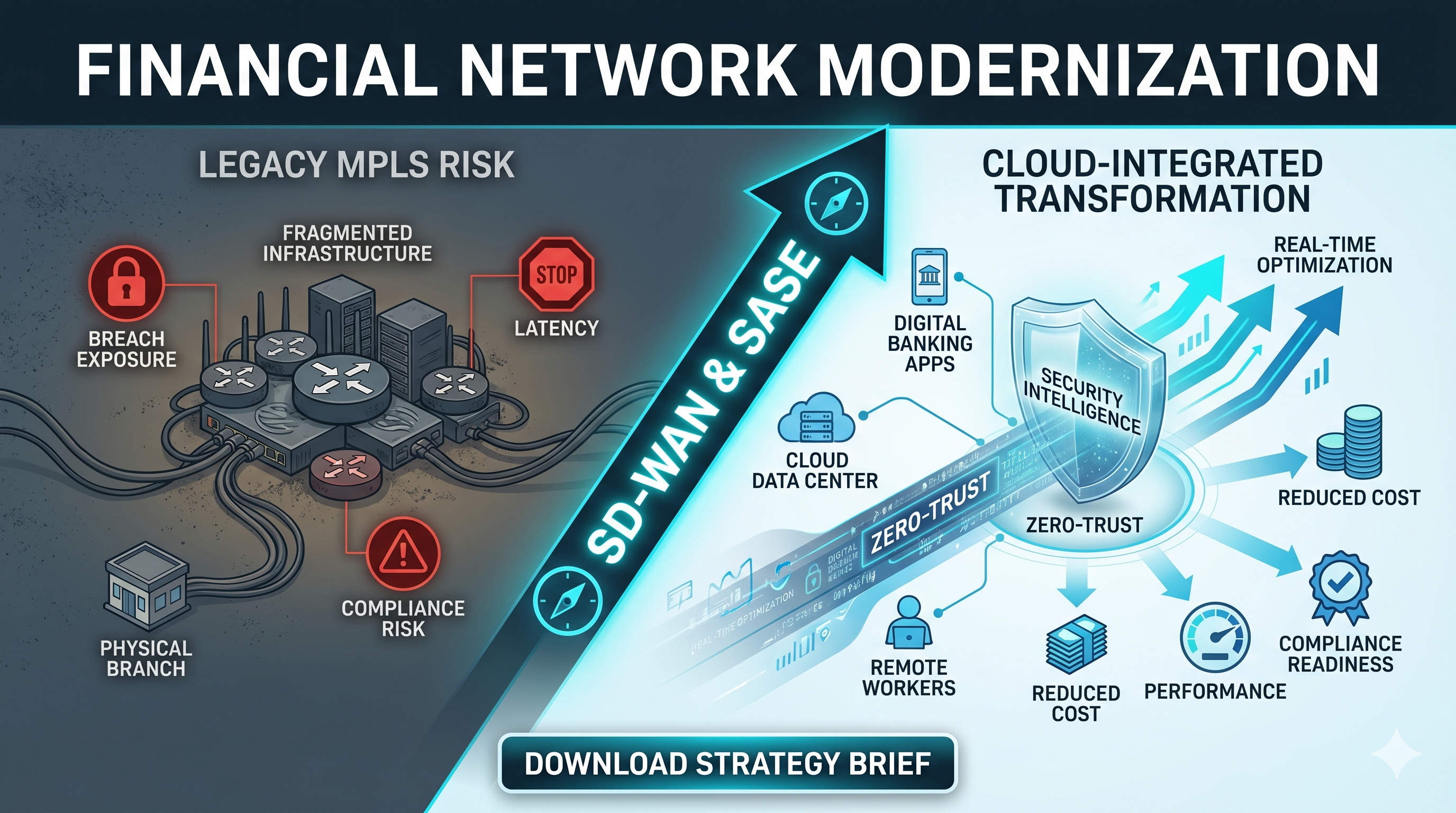
Financial services organizations are undergoing a structural shift driven by digital banking adoption, with most customers now preferring mobile and online channels over physical branches.
This shift is exposing the limits of legacy MPLS-based networks that were never designed for cloud-scale transactions, real-time analytics, or distributed workforce environments.
As transaction volumes surge and data flows across branches, cloud platforms, and remote endpoints, financial institutions must rethink how networks are designed, secured, and managed.
The impact extends beyond IT systems — it reshapes customer experience, compliance posture, and the ability of financial institutions to compete with digital-native fintech platforms.
Organizations relying on fragmented legacy infrastructure face higher operational cost, slower innovation cycles, and increased vulnerability to ransomware and data exfiltration attacks.
Financial services firms adopting modern network architectures are improving performance, reducing cost overhead, and strengthening compliance readiness across distributed environments.
- Replace MPLS dependency with SD-WAN-enabled agile connectivity
- Enable secure cloud-first architecture with SASE frameworks
- Centralize network visibility across branches and hybrid environments
- Automate security enforcement with zero-trust and encrypted traffic flows
- Optimize bandwidth for real-time digital banking and analytics workloads
This transformation enables financial institutions to align infrastructure with cloud-first operations while maintaining regulatory compliance and customer trust at scale.
✔ SD-WAN migration readiness analysis
✔ Cloud security exposure mapping
✔ Branch connectivity optimization insights
✔ Financial services compliance risk framework