
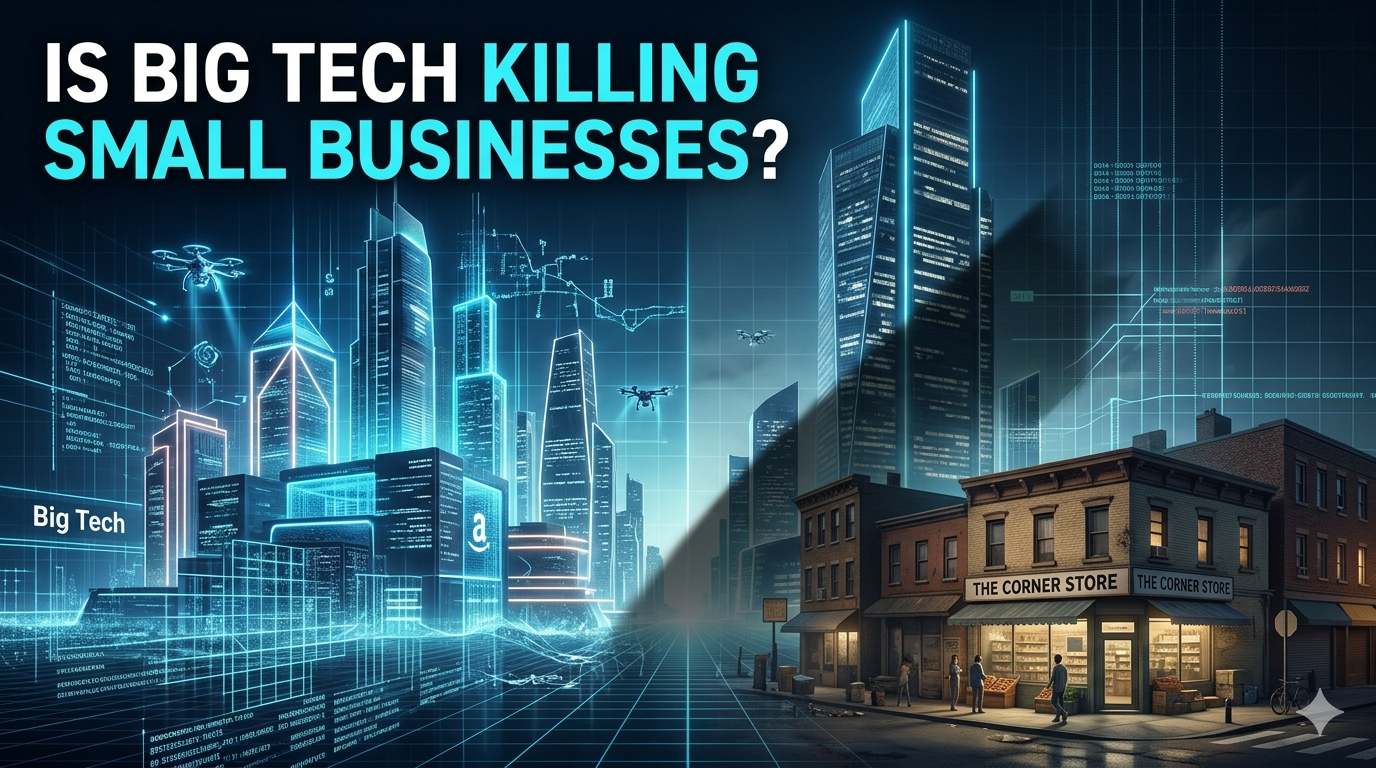
The rise of big technology platforms has fundamentally changed how businesses operate, compete, and reach customers.
Companies like Amazon, Google, and other digital marketplaces have created massive ecosystems that small businesses must now compete within.
According to Amazon’s growth data, the platform has expanded aggressively across retail categories, reshaping consumer buying behavior worldwide.
U.S. Census Bureau retail trends show a steady shift from traditional brick-and-mortar stores toward online purchasing channels.
Key challenges impacting small retailers include:
- High competition from large-scale e-commerce platforms
- Price undercutting and aggressive discount strategies
- Dependence on platform algorithms for visibility
- Rising digital advertising costs
At the same time, Big Tech has also created new opportunities for small businesses:
- Global customer reach without physical expansion
- Lower entry barriers to online selling
- Access to logistics and fulfillment networks
- Data-driven marketing tools
The real debate is not simply about destruction, but about imbalance in market power.
Small businesses that adapt to digital transformation are finding new ways to survive and even grow within Big Tech ecosystems.
However, long-term sustainability depends on fair competition, platform regulation, and consumer awareness.
✔ Is convenience worth the cost of market dominance?
✔ Should consumers support local businesses more actively?
✔ Or is digital disruption unavoidable?
Your opinion matters in shaping the future of commerce.