
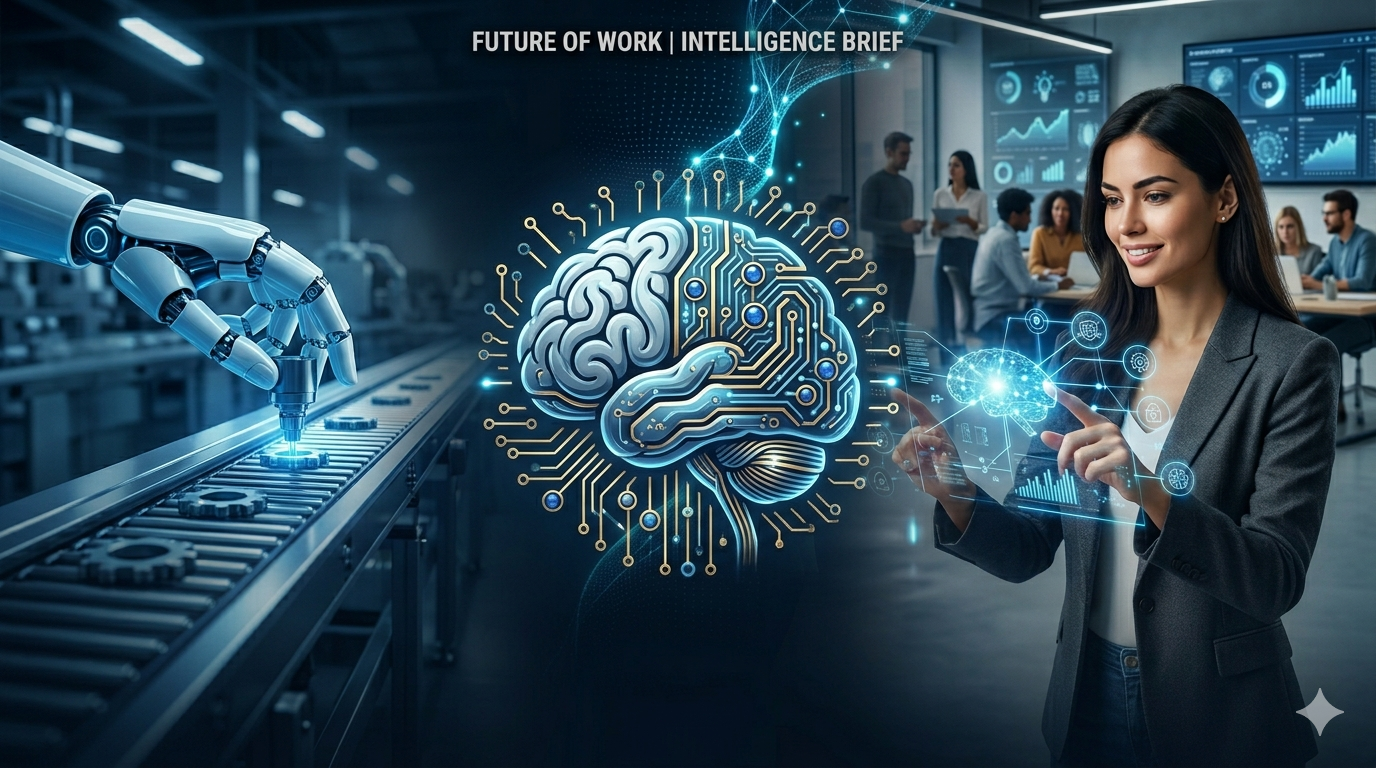
The rise of artificial intelligence is transforming global industries at an unprecedented speed, reshaping how work is created, managed, and delivered. While AI automates repetitive tasks, it also unlocks new job roles and industries that didn’t exist a few years ago.
According to the World Economic Forum’s Future of Jobs Report, millions of jobs may be displaced, but even more new roles will emerge in AI-driven industries. Reports from McKinsey & Company highlight that automation impacts routine tasks most, while human skills like creativity, communication, and problem-solving become even more valuable.
Industries most affected by AI automation include:
- Manufacturing and production lines
- Customer support operations
- Data entry and administrative tasks
- Basic financial processing roles
At the same time, new opportunities are emerging in:
- Artificial intelligence and machine learning
- Data science and analytics
- Cybersecurity and AI ethics
- Human-AI collaboration roles
The real challenge is not whether AI will replace jobs, but how quickly workers can adapt to evolving skill demands.
To stay relevant, education systems and organizations must focus heavily on reskilling and continuous learning. Ultimately, AI will reshape the job market rather than eliminate it, rewarding those who adapt early and continuously upgrade their skills.
✔ Should students prepare for jobs that don’t exist yet?
✔ Are current skills enough for the AI era?
✔ Or is reskilling the only way forward?
Your opinion matters in shaping the future of work.