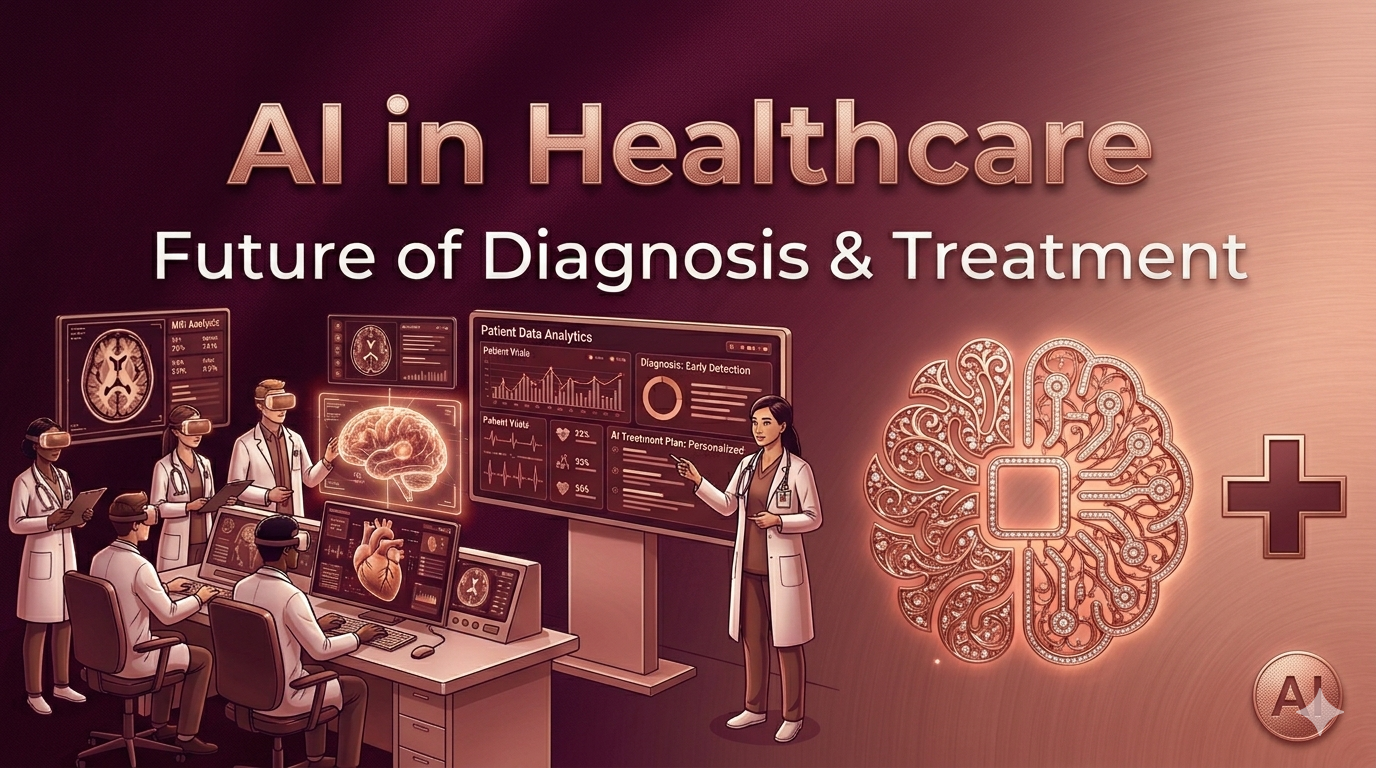
The healthcare sector is experiencing a technological revolution in 2026, driven primarily by Artificial Intelligence. AI is transforming the way medical professionals diagnose, treat, and manage patient care. From predictive analytics to robotic-assisted surgeries, the future of healthcare is increasingly intelligent, efficient, and personalized.
This article explores the key applications of AI in healthcare, demonstrating how these technologies are shaping the future of diagnosis and treatment.
Predictive Analytics for Early Diagnosis
AI systems are now capable of analyzing vast datasets from medical records, lab results, and imaging scans to predict potential health risks. Early detection allows healthcare providers to intervene before conditions become severe.
- Identifying risk factors for chronic diseases
- Predicting outbreaks and patient outcomes
- Assisting in personalized preventive care
By leveraging predictive analytics, hospitals can reduce emergency cases and improve patient quality of life through proactive treatment plans.
AI-Powered Imaging and Diagnostics
Medical imaging has been revolutionized by AI algorithms capable of detecting anomalies in X-rays, MRIs, and CT scans with remarkable accuracy. AI-assisted diagnostics reduce human error and speed up the analysis process.
- Automated detection of tumors and fractures
- Real-time image analysis for faster reporting
- Integration with electronic health records for seamless workflow
Radiologists now collaborate with AI systems, combining human expertise with machine precision to provide faster and more accurate diagnoses.
Robotic-Assisted Surgeries
Surgical robotics, guided by AI, allow for precise and minimally invasive procedures. These systems enhance a surgeon’s capabilities, improving patient recovery times and reducing complications.
- High precision for delicate surgeries
- Enhanced dexterity and reduced fatigue for surgeons
- Integration with AI for real-time decision support
Patients benefit from faster healing and fewer post-operative issues, while surgeons can perform complex procedures with higher confidence.
Virtual Health Assistants
AI-powered virtual assistants provide patients with instant health guidance, reminders for medication, and symptom checking. They act as the first point of contact, reducing the burden on healthcare staff.
- 24/7 health monitoring and advice
- Medication reminders and tracking
- Remote symptom assessment for telemedicine consultations
These assistants improve patient engagement and adherence to treatment plans, especially for chronic conditions.
Personalized Treatment Plans
AI analyzes patient genetics, lifestyle, and historical treatment data to tailor healthcare plans. Personalized treatment ensures better outcomes and minimizes side effects.
- Customized drug prescriptions
- Precision oncology treatments
- Adaptive therapy plans based on real-time progress
This patient-centric approach is helping the healthcare industry move from a one-size-fits-all model to highly individualized care.
💬 Have a Question or Insight?
We’d love to hear your thoughts! Whether you have doubts, suggestions, or your own experience with AI in healthcare — your voice matters.
👉 Fill out the form on the right side of this article and share your feedback.